Many thanks to SRAA contributor Paul Harner, who shares the following recording and notes:
Broadcaster: Radio Netherlands 'Media Network' Program
Date of recording: April 23, 1987
Starting time: Unknown
Frequency: Either 6165 or 9590 kHz
Reception location: St.Louis, MO
Receiver and antenna: Icom IC R-71-A
Notes: I recorded "Media Network" using a timer, and reused these tapes weekly. In this case, it became a time capsule. It is also not a show that is on Jonathan Marks' archive site.
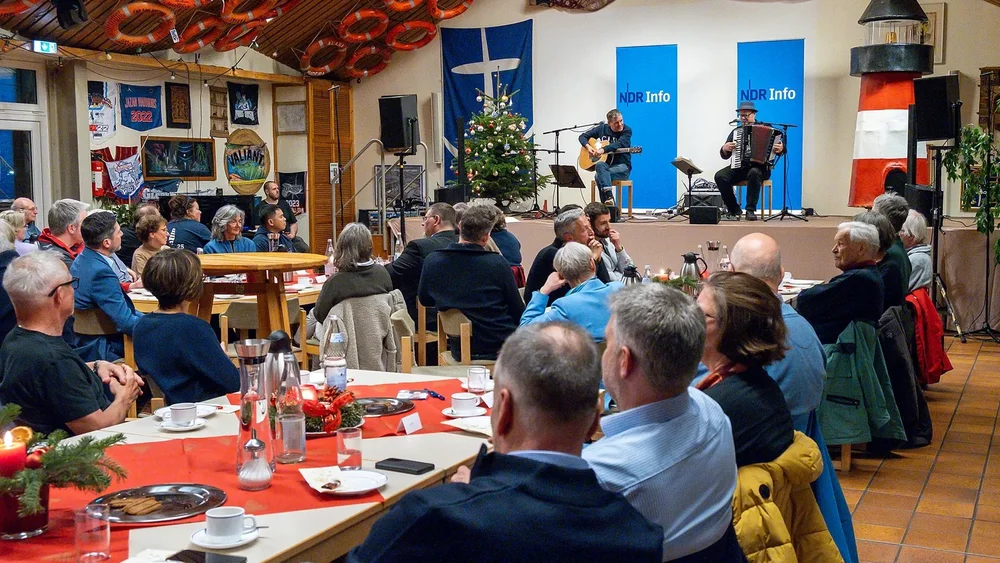
Live, off-air, two-hour recording of the special annual Gruss an Bord program from German broadcaster NDR, Norddeutscher Rundfunk, on 24 December 2025. Gruss an Bord features music and greetings to and from mariners around the world. The Christmas greetings were recorded at an event in Hamburg.
Relatives and friends had the opportunity to wish their loved ones at sea a happy holiday and a happy new year. The Hamburg event was recorded on the third Sunday of Advent, 14 December, in the Duckdalben International Seamen's Club and was hosted by Susanne Stichler. The program included a number of special guests including Bishop Kirsten Fehrs; Hamburg's Senator for Economic Affairs, Melanie Leonhard; the Federal Government's Maritime Coordinator, Christoph Ploß; and Vice Admiral Axel Deertz. Music was provided by the folk music duo of Frank Grischek and Ralf Lübke. The broadcast was primarily in German, however there were several minutes in English when Filipino seamen were interviewed and some of the songs had English lyrics.
In addition to being carried on the NDR Info and NDR Info Spezial networks, the broadcast was transmitted around the world on shortwave using transmitters at Nauen, Germany; Issoudun, France; Tashkent, Uzbekistan; and Okeechobee, Florida, U.S.A.; and was organized by Media Broadcast.
The scheduled frequencies (kHz) were: 6030 (via Issoudun) for the Northeast Atlantic, 6080 (via Tashkent) for Europe, 9635 (via Nauen) for the Indian Ocean, 11650 (via Issoudun) for the Atlantic and Indian Oceans, 13830 (via Nauen) for the Southern Atlantic, and 15770 (via Okeechobee) for the Northwest Atlantic
Monitors reported that the program did not air on 9635 or 11650 kHz.
This recording was made in Hanwell (just outside Fredericton), New Brunswick, Canada. It is of the transmission on the frequency of 15770 kHz for the full two hours.
The recording was made primarily using a Belka-DX receiver in pseudo-synchronous (AM2) mode with a bandwidth of 50 Hz - 2.7 kHz outdoors with a Tecsun AN-03L 7-metre wire antenna Reception was quite good for the most part with a bit of fading at times. But that receiver was initially tuned to 13830 kHz with a weaker signal. However, 15770 kHz was being recorded simultaneously with a KiwiSDR 2 software-defined radio receiver in narrow AM (AMN) mode with noise cancelling and with a W6LVP indoor magnetic loop antenna. So, the recording here has about a 4-1/2-minute splice from the KiwiSDR receiver at the beginning with the remainder of the recording from the Belka-DX receiver. A few seconds of the end of the program are missing as WRMI cut over to other programming before the complete end of the program.
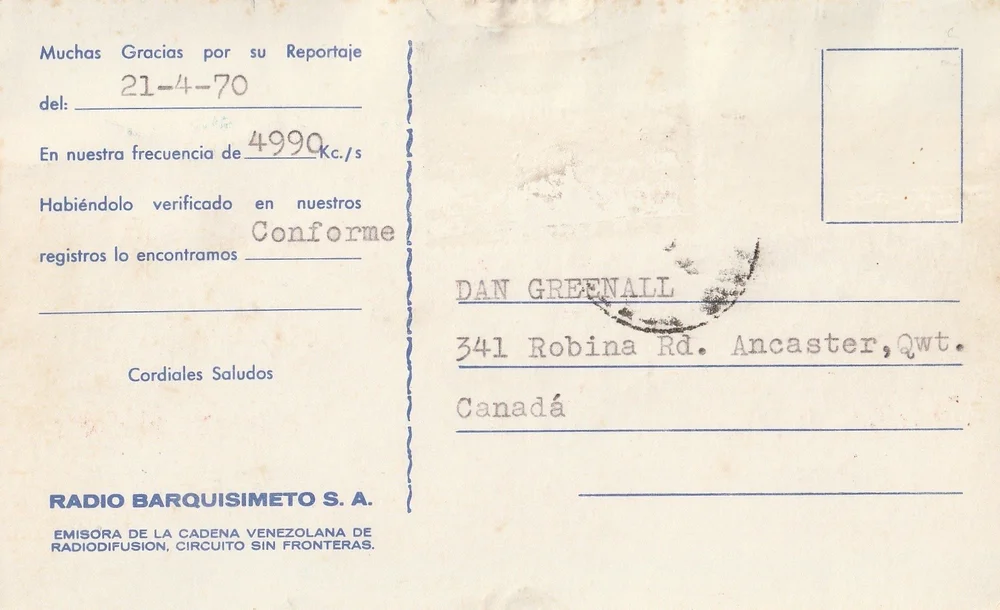
Many thanks to SRAA contributor Dan Greenall, who shares the following recording and notes:
Broadcaster: Radio Barquisimeto, Venezuela 1970
Frequency: 4.990 MHz
Reception location: Ancaster, Ontario, Canada
Receiver and antenna: Hallicrafters S-52 using a longwire antenna
Notes: On 4990 kHz shortwave, Radio Barquisimeto in Venezuela was one of the "regulars" on the 60 metre band here in southern Ontario Canada during the evening hours in the 1970's. On nearby 4980 kHz, you could find Ecos del Torbes from San Cristobal.
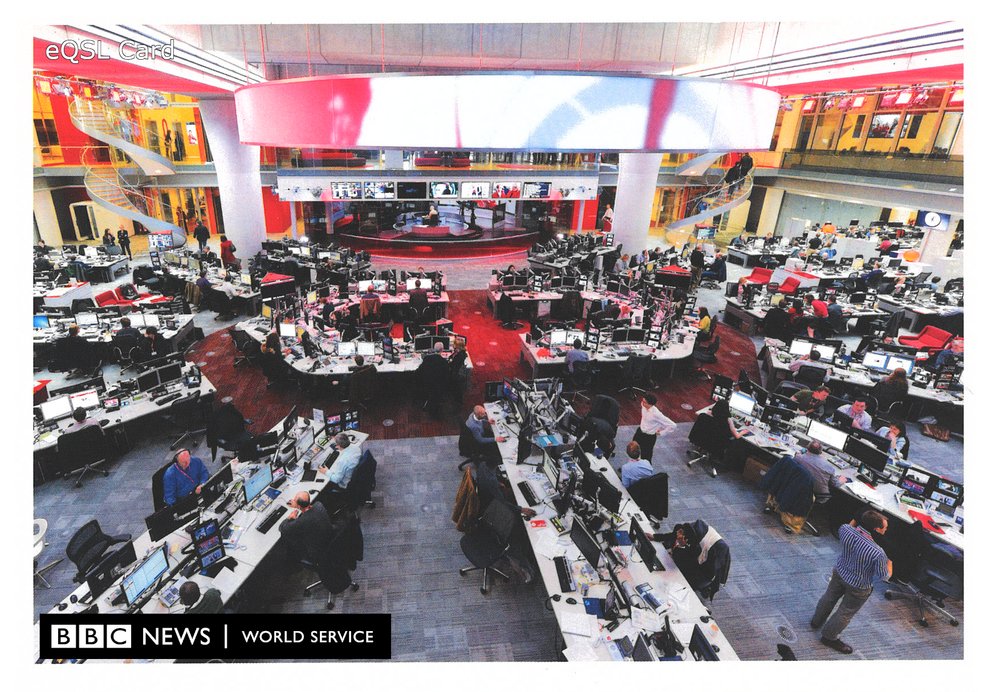
Many thanks to SRAA contributor Paul Walker, who shares the following field recording of the BBC World Service on 9410 kHz made on September 28, 2025 at 0603 UTC in McGrath, Alaska. Paul notes that this was an exceptionally strong signal to have been received in McGrath, Alaska.
Many thanks to SRAA contributor David Goren, who shares the following recording of Emisoras Jesús del Gran Poder Quito, which he recorded on cassette tape, most likely in the summer of 1989. This broadcast was received on 5050 kHz.
Many thanks to SRAA contributor Paul Walker, who shares the following field recording of the BBC World Service (French Language Service) on 13790 kHz made on Sept 20, 2025 at 1815 UTC in McGrath, Alaska.
Many thanks to SRAA contributor Paul Walker, who shares the following field recordings of the BBC World Service on 9410 kHz made on September 19, 20, and 25, 2025 at 0458 UTC in McGrath, Alaska. Paul notes:
The English feed via Ascension to West Africa operates from 05:00 to 07:00 UTC on several days in late September, featuring something rare: the carrier is switched on, followed by a brief silence and then an interval signal. This sequence occurs every time I hear this transmission sign on, but I have noticed it almost nowhere else on BBC World Service shortwave, which usually just “crash starts” and ends abruptly.
View from the roof of the RCI Sackville, New Brunswick Transmitting Station (Photo: Thomas Witherspoon)
Many thanks to SRAA contributor William Parmley, who found several cassette tapes with off-air recordings he made in the 1980s. Here are Bill’s notes for this recording:
SWL Digest on Radio Canada International with Ian McFarland, April 26, 1986, plus an excerpt from the same program on the next day, April 27, 1986. Includes a brief telephone interview with me. (40:57)
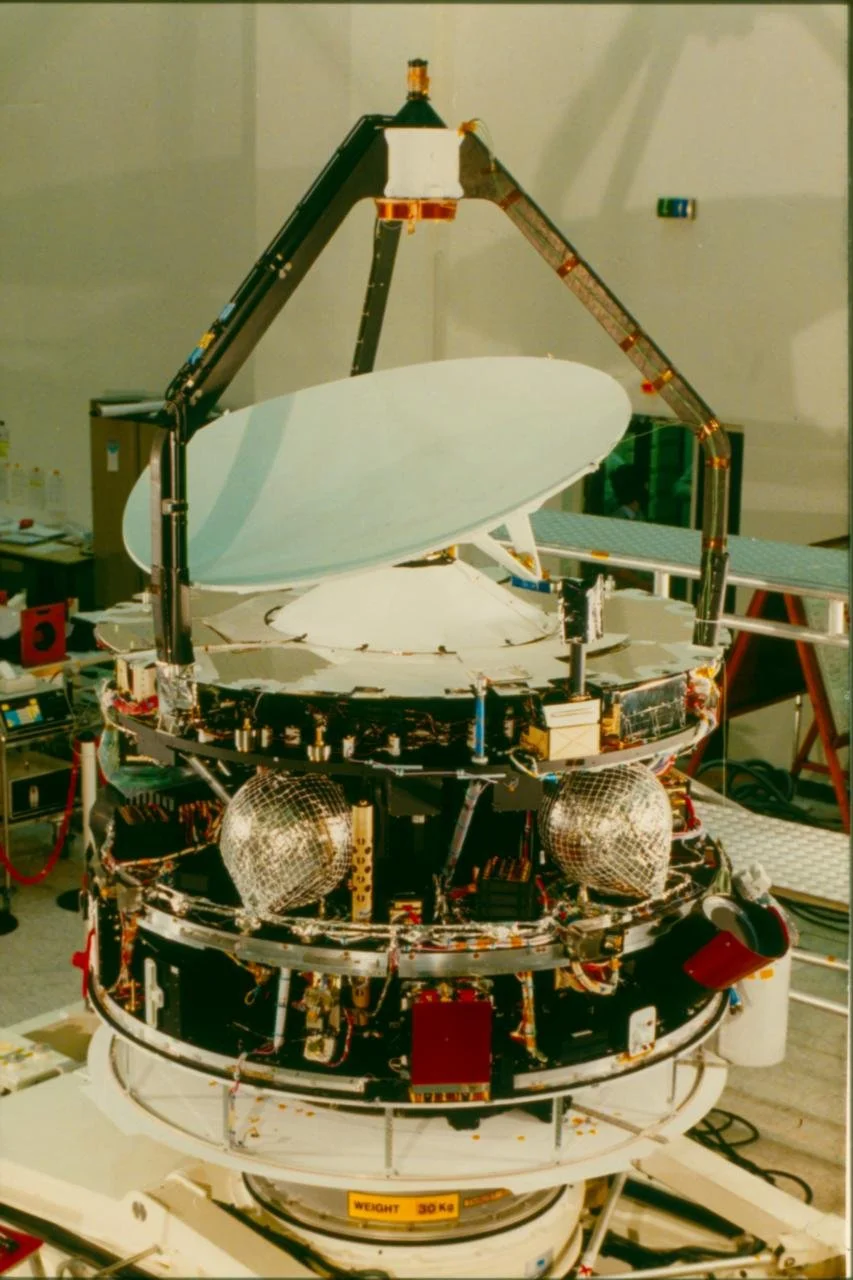
An image of the Giotto spacecraft during construction (Source: ESA)
Many thanks to SRAA contributor William Parmley, who found several cassette tapes with off-air recordings he made in the 1980s. Here are Bill’s notes for this recording:
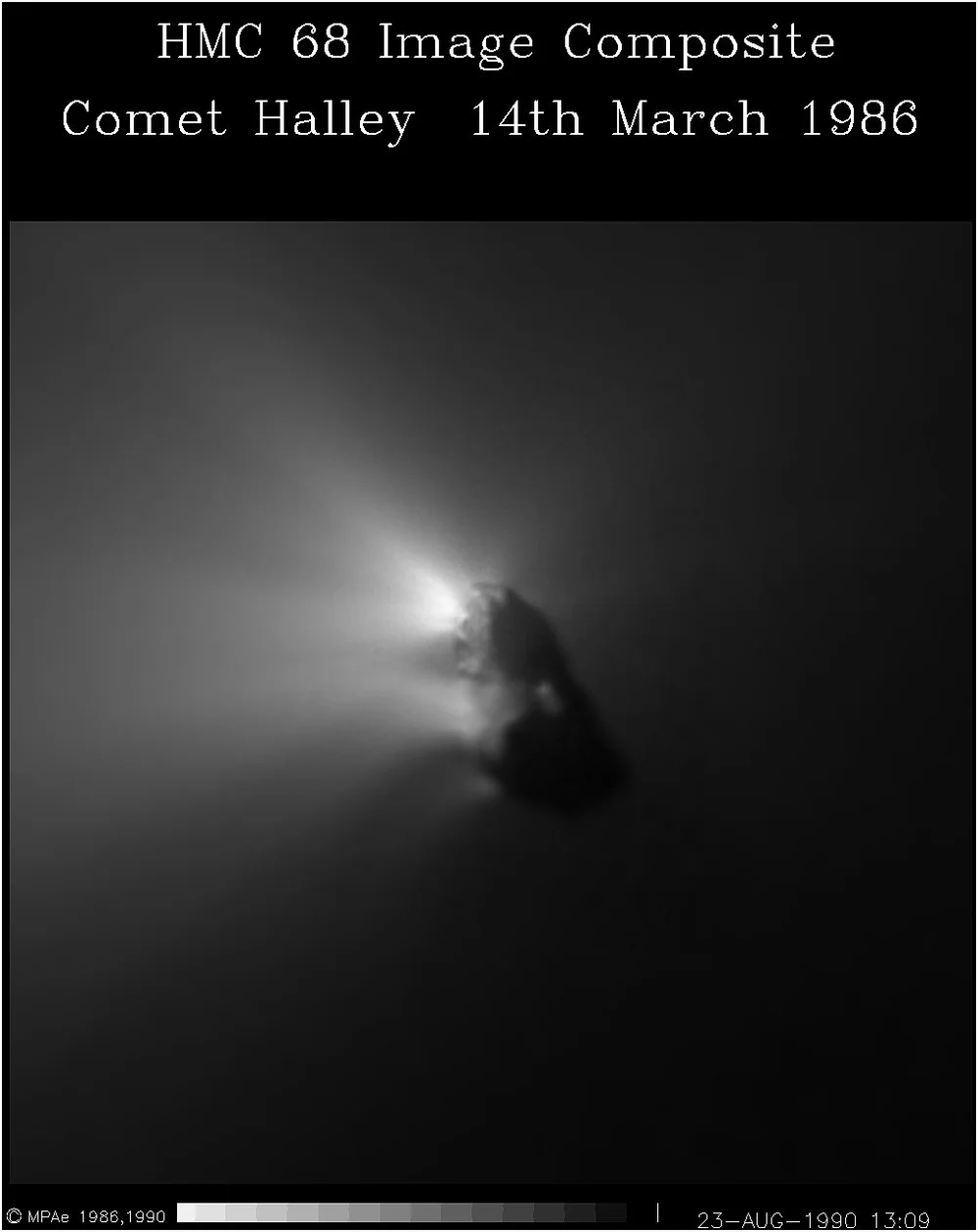
BBC transmission live during the encounter of the Giotto space probe with Haley’s Comet, March 13, 1986. (43:45)
Comet Halley at Giotto spacecraft's closest approach (Source: ESA)