
A live, off-air, half-hour recording of the BBC World Service special Antarctic Midwinter Broadcast on 21 June 2023 beginning at 21:30 UTC. The broadcast, hosted by Cerys Matthews, featured messages and music for the 37 members of the staff of the British Antarctic Survey (BAS) overwintering in Antarctica at the Rothera (Antarctic Peninsula) and King Edward Point and Bird Island (South Georgia) research stations. In addition to personal messages from family and friends, there were interviews withProfessor Dame Jane Francis, Director of BAS and Nadia Frontier, a marine biologist from BAS and former winterer. The transmitter came on the air with a test tone (1108 Hz plus harmonics) about a minute before the program started. As sometimes happens, the first few words of the introduction were missed.
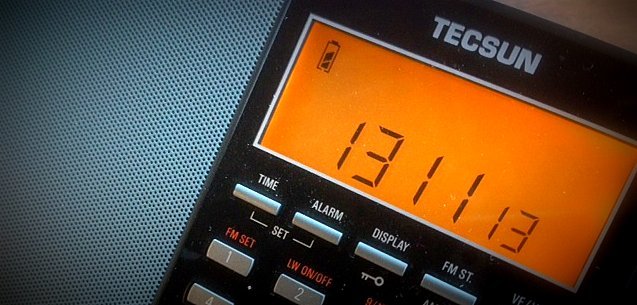
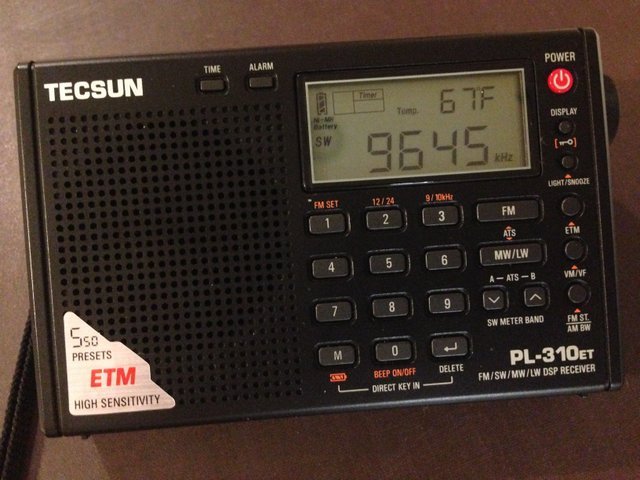
The recording is of the transmission first on a frequency of 12005 kHz but after a few minutes it was switched to 13810 kHz due to interference (QRM) on the former frequency. Both frequencies were from the BBC's Woofferton, England, transmitting station. The sender of the 12005 kHz frequency had a registered power of 300 kW with antenna beam 182 degrees, while that for 13810 kHz was registered as 250 kW with an antenna beam of180 degrees. The transmission was received on a Tecsun PL-880 receiver with a Tecsun AN-03L 7-metre wire antenna outdoors in Hanwell (just outside Fredericton), New Brunswick, Canada, in AM mode with 2.3 kHz RF filtering. Reception on 13810 kHz was quite good with little noise or fading and very good signal strength. The additional parallel frequency of 7255 kHz from Dhabbaya, United Arab Emirates was not heard.
Many thanks to SRAA contributor, Antonio Ribeiro da Motta, who shares the following recording and notes:
Broadcaster: KGEI San Francisco CA USA
Date of recording: April 01, 1978
Starting time: 2030 UTC
Frequency: 9615 kHz
Recotion location: São José dos Campos SP Brazil
Receiver and antenna: Philco Transglobe B481 Longwire 22 mt
Notes: Recording of the program Departiendo con La Juventud presented by Mario Barahona (in memorian). There are 2 programs that were merged: days 01 and 02/04/1978.
Receiver and antenna: Grundig Satellit 2000 w/loop antenna
Notes: VoP Aleppo, Syria QRG: 1313 kHz QTH: Schwaebisch Gmuend / Germany Rec: 14th Oct. 1978 - 18:29 UTC (GMT) Rx, Ant: Grundig Satellit 2000 w/loop antenna Px: A, nx, ID, local mx SINPO: 23332 From the times before its destruction, when Aleppo was one of the prettiest cities in the Middle East.
Many thanks to SRAA contributor, Dan Greenall, who shares the following recording and notes:
Broadcaster: Radio Togo, Lome circa 1973
Frequency: 5.047 MHz
Reception location: Ancaster, Ontario, Canada
Receiver and antenna: Realistic DX-150A with a long wire antenna
Notes: In the early 1970's, Radio Togo from Lome was often the strongest African signal on the 60 metre shortwave band. They could be heard here best in southern Ontario, Canada around 0530 UTC sign on, or around sign off at 2300 hours UTC, on their longtime frequency of 5047 kHz. Programming was mostly in French and identification could be given differently, such as Radiodiffusion du Togo or Radiodiffusion-Television Togolaise. Here are two recordings circa 1973, one at sign on with interval signal and anthem, the other at sign off.
Many thanks to SRAA contributor, Bryce Belcher, who shares the following recording and notes:
Broadcaster: WTWW “The Voice of Freedom”
Date of recording: 4/25/2022
Starting time: 23:13 UTC
Frequency: 5.085 MHz
Reception location: Columbus Ohio
Receiver and antenna: My Tecsun PL880 with just the telescopic antenna
Notes: My recording of WTWW, the voice of freedom on 5085 MHz from April 25, 2022. The reception was pretty good here in Columbus in this recording. With just the telescopic antenna the station comes in pretty good.
RTL longwave antenna array at Beidweiler, Luxembourg
Live off-air recording of the last approximately two hours of programming from the RTL longwave station on 1 January 2023 beginning at 22:00 UTC on the frequency of 234 kHz. The signal originated from a transmitter located in Beidweiler, Luxembourg, reported to operate with a power of 375 kW at night (and 750 kW during the day). The transmitter was capable of operating at 1500 kW. The three-mast antenna beamed the signal mostly in the direction of Paris.
RTL is a general-interest, news, talk, and music station station owned by the RTL Group with its main studios in Paris. It has an extensive FM network covering France and also uses other broadcasting means such as DAB+ and streaming services.
The final two hours of programming was produced and presented by long-time French broadcaster Georges Lang, a devotee of English-language rock, pop, and blues music primarily from the 1960s through the 1980s. The first hour was a special New Year's version of the "Georges Lang Collection" followed by "Les Nocturnes," a program Lang has done for fifty years. The transmitter left the air at 00:00:05 UTC.
The broadcast was received by the Web-interface wideband software-defined radio at the University of Twente in Enschede, The Netherlands, with a "Mini-Whip" antenna in AM mode with 9.00 kHz RF filtering. Reception was excellent.
Many thanks to SRAA contributor, Dan Greenall, who shares the following recordings and notes:
Broadcaster: Radio Canada International Interval Signal Series 1970's
Date of recording: Circa 1970s
Frequency: 9.625 MHz
Reception location: Ancaster, Ontario, Canada
Receiver and antenna: Hallicrafters S-52 or Realistic DX-150A and a longwire antenna
Notes: Back in the early 1970s, Radio Canada International ran a very popular interval signal series on their SWL Digest program. This was hopefully to help DXer's identify that sought after station. I recall recording a few of these programs, and while going over one of my old cassette tapes recently, I came across a segment where they were presenting a number of African interval signals. Subsequently, I have uncovered five additional segments, or at least, portions of them. As these were originally recorded with an open mike to the speaker of the receiver, some room noise (voices) may be detected, as well as small amounts of unedited material near the ends of some of the segments. These were recorded at Ancaster, Ontario, Canada, likely on 9625 kHz.