Join Keith Snyder, KI6BDR at 8pm this evening for this fascinating talk. You can watch Keith’s talk live here on the RSGB website at rsgb.org/webinars and on our YouTube and BATC channels where you can also ask live questions. Find out more about Keith and his presentation
The RSGB email system will be offline today to allow for essential electrical maintenance work to occur at RSGB HQ. During this time if you have an RSGB email account, you won’t be able to send or receive mail. Our apologies for any inconvenience. If works proceed to plan the systems will power up again […]
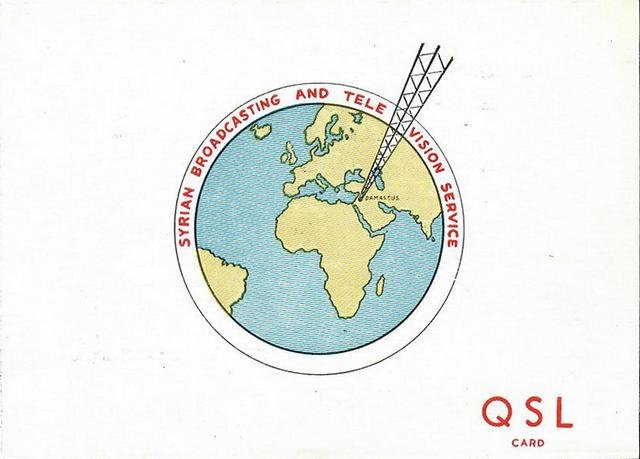
In the early 1970’s, Syria was among the major shortwave broadcasters from the Middle East. The Broadcasting Service of the Syrian Arab Republic, as it was called back then, put in fairly strong signals on 15,165 khz in the 19 meter band, though not as powerful as other stations such as Radio Kuwait and Radio Cairo. In this recording from 1971, we hear a political commentary on the Palestinians, followed by station identification: “You are tuned to Damascus, the broadcasting service of the Syrian Arab Republic. The time is exactly 23 hours and 10 minutes.” While Damascus was still using shortwave, including its old 12,085 khz frequency and 9,330 khz in the first decade of the 2000s, the civil war in Syria along with decisions made to end shortwave, removed this once familiar Middle East voice from the shortwave bands.
In 2022, it is quite astounding that we still have, at least as of now, two Middle East broadcasters still on the air on shortwave: Saudi Arabia, and Kuwait. Radio Cairo was making attempts to return as of early 2022 but having great difficulties resolving its longstanding modulation and distortion problems. Jordan is now gone, as is Bahrain it seems. Oman which was still on shortwave as of 2019 is now either gone or intermittent. Radio Kuwait, which returned to shortwave some years ago, began shifting to DRM transmissions though is still being heard on regular AM shortwave, though with some highly variable shifts of frequency.
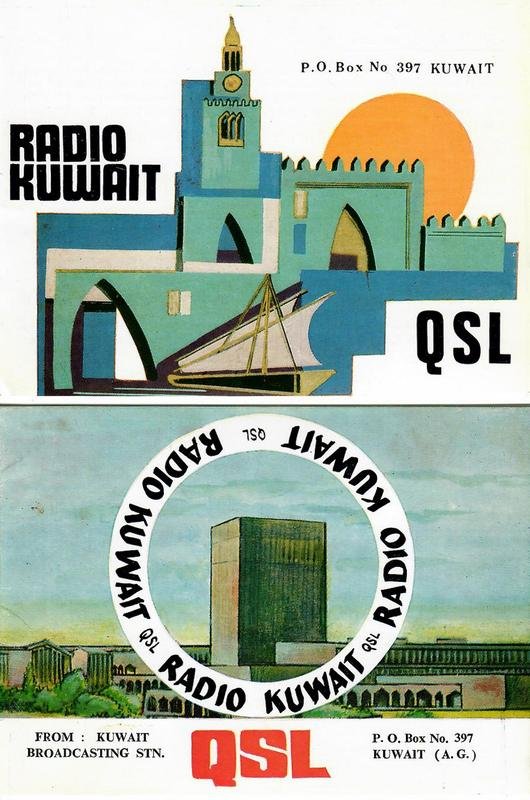
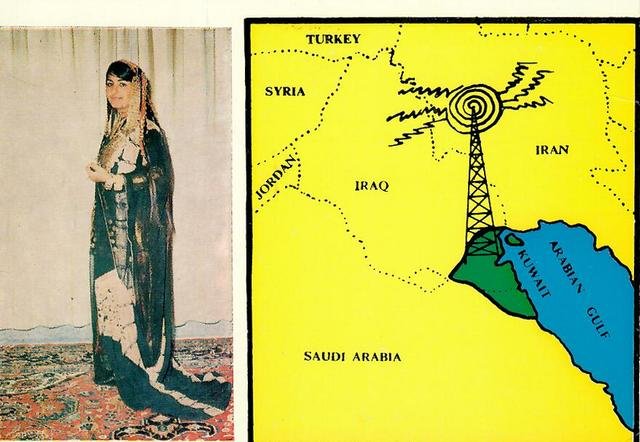
Which brings us back to the good old days when Radio Kuwait was the new powerhouse in shortwave broadcasting from the Middle East, having taken delivery of 250 kilowatt transmitters. Radio Kuwait was a daily presence on shortwave for decades, with its familiar musical interval before English newscasts, and music programs. As a young SWL, I used to listen to Radio Kuwait almost on a daily basis, usually in the 19 meter band. The signal was so strong and clear that it was easy to tune in on the 1940’s T-133 receiver I used at the time. Here is a recording of Radio Kuwait from 1970. The station was also a superb reliable verifier of reception reports and sent out beautiful folder QSLs.
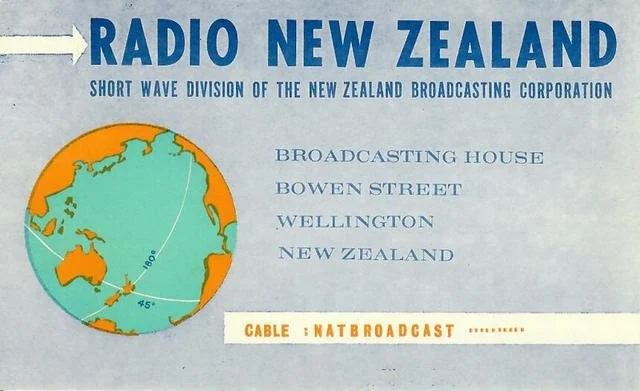
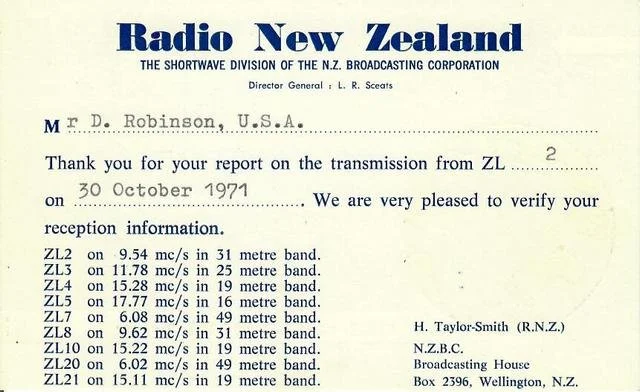
In 2022, one station in the South Pacific remains on shortwave, to the great delight of shortwave listeners. That station is Radio New Zealand, which as of early 2022 could still be heard with good signals. Back in the 1970’s Radio New Zealand was a prime DX target. Its sign on at 0600 UTC required staying up until 2:00 AM in summer months. For signs of good Pacific propagation, DX’ers often used VNG, the former time signal station in Australia, as a marker. If VNG was coming in well, then New Zealand and Tahiti were likely to be coming in well. It’s hard to explain the feeling a new SWL got hearing Radio New Zealand in those days. At a power of 7.5 kilowatts, the station listed on its QSL card (shown here) 9 frequencies, including 9.54 mHz and 11.780 mHz where I used to hear them. Other frequencies in 1971 were 15.280, 17.770, 6.080, 9.620, 15.220, 6.020, and 15.110 mHz for ZL2/3/4/5/7/8/10/20 and 21 call letters. The verification signer was H. Taylor-Smith at NZBC Broadcasting House in Wellington. Hearing this 7.5 kilowatt signal, with its characteristic fading as the signal made its way the many thousands of miles to Pennsylvania, was a real thrill. Here is the 1971 recording of Radio New Zealand, from sign on with its “Bellbird” interval signal and BBC news relay.
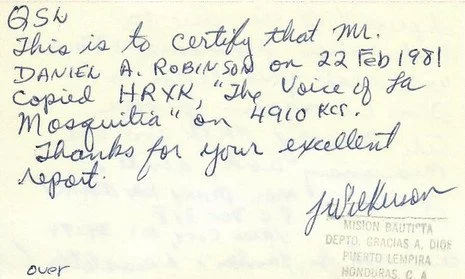
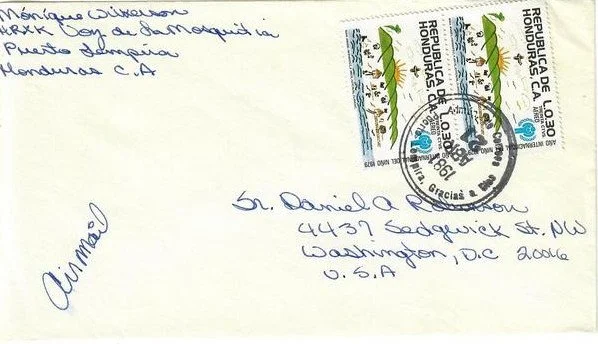
In 1981, a small U.S.- supported station called La Voz de Mosquitia (HRXK) went on air from Puerto Lempira, Honduras. The frequency was 4,910 khz — and it was plagued by interference from other Latin American stations in the 60 meter band. A good write up about the station can be found here. This recording was made in Washington, DC using a Hammarlund HQ-180A receiver. The plain QSL card shown here was signed by Reverend Landon Wilkerson, an independent Baptist Missionary, who spent seventeen years in Honduras with his wife and family helping the Miskito Indians.
Tap or click the link below to download this week’s GB2RS news script GB2RS News Script for 6 February 2022 (15-page/450KB Microsoft Word document) . Problems downloading the GB2RS news script? Try this alternative link
Owners of Yaesu C4FM transceivers may be interested to learn of a new Wires-X room called Southern Fusion, currently room 41893. It is focussed primarily on repeater and gateway users in southern England and, of course, Wires-X users anywhere on the planet. RF access is available via a growing number of C4FM repeaters. These include […]
It has been reported that a person has been prosecuted for racial harassment over the air. Details of the conviction can be found in an entry on the 2nd of February on the Sussex Police website. The RSGB will be raising this with Ofcom. Anyone experiencing similar on-air harassment is encouraged to report the matter […]
If you are travelling to Florida in the USA in the near future, you may care to visit the 75th Orlando HamCation. It will take place between the 11th and 13th of February at the Central Florida Fairgrounds and Expo Park. Looking ahead to the 20th of February, the Radioactive Fair will take place at […]