Many thanks to SRAA contributor Tom Gavaras, who shares the following recording and notes:
Broadcaster: Radio Havana Cuba
Date of recording: May 21, 1985
Starting time: 0630
Frequency: 9.525
Reception location: Minnetonka, MN
Receiver and antenna: Longwire
Notes: Broadcast the day after the launch of Radio Martí, with related commentary. Also featured are a look back at the historic Freedom Rides in the United States, From the Land of Music, and Panorama on the Second International Electroacoustic Music Festival in Cuba.
Radio Havana Cuba: May 21, 1985
Tom Gavaras
Download
Many thanks to SRAA contributor Tom Gavaras, who shares the following recording and notes:
Broadcaster: Radio Earth on WRNO
Date of recording: March 10, 1984
Starting time: 0300
Frequency: 6.185 MHz
Reception location: Minnetonka, MN
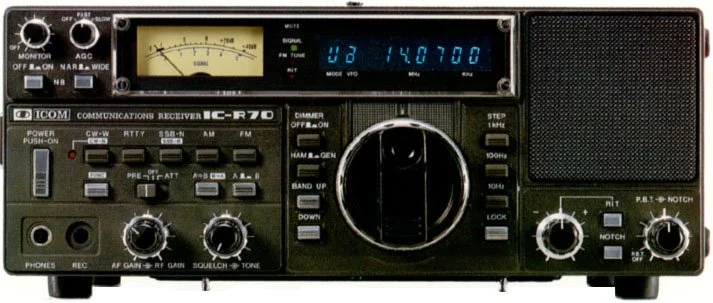
Receiver and antenna: ICOM R70 with a longwire
Notes: Radio Earth via WRNO on March 10, 1984, at 0300 UTC on 6185 kHz, with Jeff White. Includes Dialogue Communications Magazine, featuring an interview with Larry Miller of Miller Publishing about the shortwave books and publications he published; Dan Rosen’s logs; a profile of the Association of Clandestine Radio Enthusiasts; news from ANARC (Association of North American Radio Clubs); and This Is the Caribbean, with Rudy Espinal in Santo Domingo, Dominican Republic. Thomas: My previous submission for Radio Havana Cuba was received on an ICOM R70 (forgot to include).
Radio Earth on WRNO: March 10, 1984
Tom Gavaras
Download
Many thanks to SRAA contributor Tom Laskowski, who shares the following recording and notes:
Broadcaster: All India Radio
Starting time: 0100
Frequency: 10330
Reception location: South Bend, Indiana
Receiver and antenna: Sony ICF-2001
Notes: One of the most enjoyable aspects of shortwave listening for me is the amazing variety of music that can be heard from all over the globe. I'm particularly interested in music from the Arab world and the Indian subcontinent. I recorded a large amount of music from All India Radio back in the early 2000s and compiled them into several recordings. AIR used to have a killer signal in our evenings on 10330 kHz and I recorded many hours of their programming. I've compiled nine (so far) music tapes from these recordings. I don't know the exact dates for these recordings.
All India Radio: Circa Early 2000s
Tom Laskowski
Download
Many thanks to SRAA contributor Tom Laskowski, who shares the following recording and notes:
Broadcaster: BBC
Date of recording: April 30, 1982
Starting time: 0000
Frequency: 15400
Reception location: South Bend, Indiana
Receiver and antenna: Realistic DX-302
Notes: Here is a recording from 1982 of BBC's Calling the Falklands from April 30, 1982 made during the Falklands War. I believe this was recorded around 0000 UT on 15400 kHz and I believe this was from the transmitter location was Ascension Island. The audio isn't great and was likely recorded on my DX-302 which didn't have great audio.
BBC World Service: April 30, 1982
Tom Laskowski
Download
Many thanks to SRAA contributor Dan Greenall, who shares the following recording and notes:
Broadcaster: Radio Payam
Date of recording: July 10, 2026
Starting time: 2049 UTC
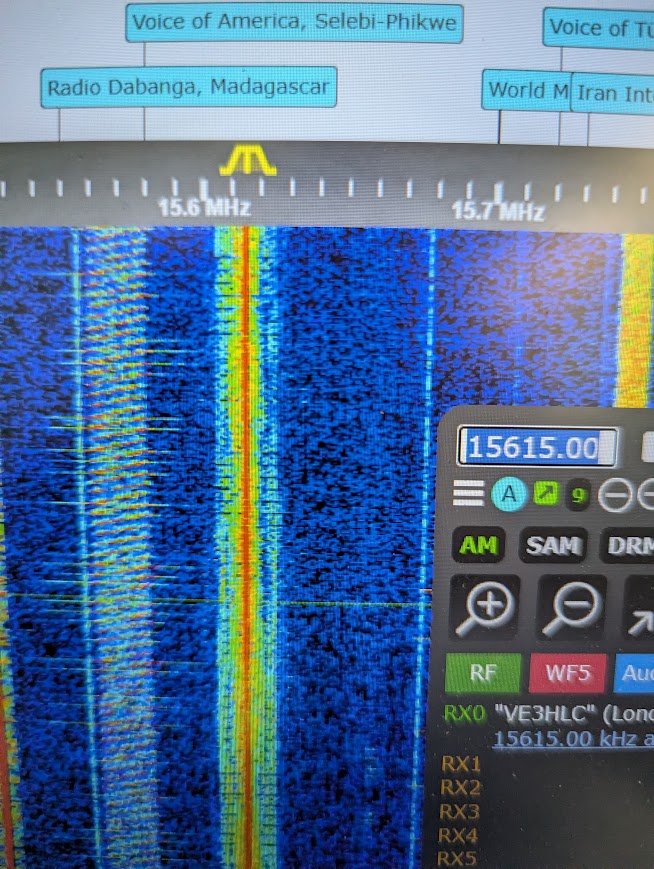
Frequency: 15.615 MHz
Receiver location: Qatar
Receiver and antenna: KiwiSDR with MLA-30+ loop antenna
Notes: A station called Radio Payam (Radio Message) has been heard recently on 15615 kHz transmitting from Woofferton, UK, with content critical of the Iranian government. The broadcasts are in Persian, and their schedule seems to run from 1700 to 2100 hours UTC.
This unofficial station provides a contrast to the Iranian state-run Radio Payam, signaling a new source of anti-Tehran content.
This recording was made starting at 2049 UTC on July 10, 2026. using a KiwiSDR located in Qatar, where, oddly enough, QRM from a bubble jammer was considerably less than when listening on similar receivers throughout Europe.
“Radio Payam” is mentioned about the 4:36 mark of the recording, and the broadcast concludes at 9:46 when only the bubble jammer can be heard A couple of minutes later, the bubble jammer’s signal goes off the air.
Radio Payam (Recording #1): July 10, 2026
Dan Greenall
Download
Radio Payam (Recording #2): July 10, 2026
Dan Greenall
Download
Many thanks to SRAA contributor Dan Greenall, who shares the following recording and notes:
Broadcaster: Radio Peking 1970's
Frequency: 15.060 MHz (likely)
Reception location: Ancaster, Ontario, Canada
Receiver and antenna: Hallicrafters S-52 using a longwire antenna
Notes: A recording of the interval signal ("The East is Red" melody) and sign on in Spanish of Radio Peking in the People's Republic of China in the early 1970's. They were heard regularly on shortwave direct from China in the 19 metre band.
Many thanks to SRAA contributor Liam Spencer, who shares the following recording and notes:
Broadcaster: Voice of Mongolia (Mailbox Program)
Date of recording: May 13, 2024
Starting time: 14:43 UTC
Frequency: 12.015 MHz
Reception location: KiwiSDR in Khabarovsk, Russia
Receiver and antenna: Unknown
Notes: Here is a recording of Voice Of Mongolia Mailbox show which occurs every Monday and was hosted by Bilguun and Robert during this time.
This was recorded during the 14:30 to 15:00 UTC slot on 12015, which is a challenging catch, even on WebSDRs, due to Voice of Korea interference on the same channel, along with Voice of Vietnam 12020 and CRI on 12010.
The transmission was poor anyway. Voice of Mongolia broadcasts are off frequency by 20 or 30 Hz, there's a hum on broadcasts, and distorted modulation. Although the modulation has improved over the past 2 years.
As for the mailbox hosts. Bilguun left in November or December 2024 and was replaced by Bumblebee. Robert announced in January 2025 that he needed to travel to New Zealand to visit family and renew his visa. Bilguun returned in April 2025 and co-hosted a mailbox show with Bumblebee and said he was on vacation in the USA. He took over the Wednesday and Thursday programs. Robert returned in May 2025 for 1 or 2 mailbag shows and hasn't been heard on Voice of Mongolia since then. Bilguun has also not been heard from recently. Bumblebee has continued to host the mailbox program since 2024.
Voice of Mongolia (Mailbox Program): May 13, 2024
Liam Spencer
Download
Many thanks to SRAA contributor Bruce MacDonald, who shares the following recording and notes:
Broadcaster: Radio Exterior de Espana
Date of recording: Unknown
Starting time: Unknown
Frequency: not recorded
Recorded in Hounslow, west London
Receiver and antenna: Sony portable stereo radio cassette player with built-in whip antenna
Notes: Recording from late 1984 or early 1985 of the DX programme transmitted by the English section of Radio Exterior de Esapana (REE). This was broadcast to Europe on a Sunday, but I did not record the time of transmission. I did not record the frequency, at a guess I think it would be either on the 49 or 41 metre bands.
A typical DX programme of the era, comprising mainly listening tips for hobbyist listeners and radio-related news. For example there's a short mention of the then-upcoming 1985 European DX Council conference which was held in Madrid. There is also a request for news and tips from listeners and an address for reception reports. At the end there's a very plummy English station ID.
This may be a bit of a hard listen for some due to intrusive QRM but I think accurately reflects the crowded bands back then, especially if your receiver didn't have a narrow filter.
Radio Exterior de España: Circa 1984-1985
Bruce MacDonald
Download